Direct Sales or a Wholesale Route: What Changes Along the Way
Direct sales or wholesale route decisions shape how food is ordered, packed and handed over, helping you choose a selling arrangement that fits the product.
How does a direct sales or wholesale route change the work of selling food? With direct sales or a wholesale route, the same crop can require different packing, handovers and conversations before it reaches the person who will eat it. Follow one product from harvest to buyer, and the practical differences become easier to see.
Follow the food
A direct sale is made to the person or household buying food for use. It might happen at a farm shop, farmers’ market, collection point or through orders placed with the producer. The food may travel only a short distance, but the seller usually handles orders, questions and the final handover.
In a wholesale sale, the producer sells to an intermediary, such as a distributor, food hub, processor or retailer buying for resale. The intermediary may combine goods from several producers, sort orders or deliver to other customers. The producer’s buyer is the intermediary, even though the food will later reach someone else.
Draw the route for each option. Mark where the product waits, who receives it and who checks it at each handover. This reveals where responsibility changes, not just how far the food travels.
Agree the order
Before accepting an order, ask what the buyer means by the product description. A specification is the agreed description of what is being sold: it could cover variety, grade, ripeness, container, label or condition on arrival. Buyers may also ask for traceability records linking a product to its source and handling.
Get the relevant requirements in writing. Confirm the quantity, order date, collection or delivery window, price and payment terms, along with what happens if the product is short, delayed or rejected. A direct customer may choose a small amount; a wholesale buyer may place a larger order with less flexibility. Neither pattern applies to every buyer, so ask whether the order is firm, provisional or part of a regular arrangement.
Check applicable food rules and buyer instructions for labels, handling and records. Requirements depend on the product and place of sale; seek advice from the relevant local authority or a qualified food-safety professional if you are unsure what applies.
Track each handover
For a direct sale, the producer may harvest, sort and pack the food, bring it to a stall or collection point, then hand it to customers individually. Customers can inspect the food and ask about its use. That can make product information part of the sale, while requiring someone to manage the stall, messages or collections.
On a wholesale route, a buyer or distributor may receive a consignment and divide it among shops, kitchens or other customers. This can move some retail-facing tasks elsewhere, but it may add a collection, storage or sorting stage. Agree who checks the goods at each handover and how either side should report a problem.
Packaging should suit the next person handling the food. A direct collection may work with a reusable crate, while a retailer may request individual packs, labels or cases suited to its stock system. Ask who supplies and returns containers, what information labels need to carry and what condition the food should be in on arrival.
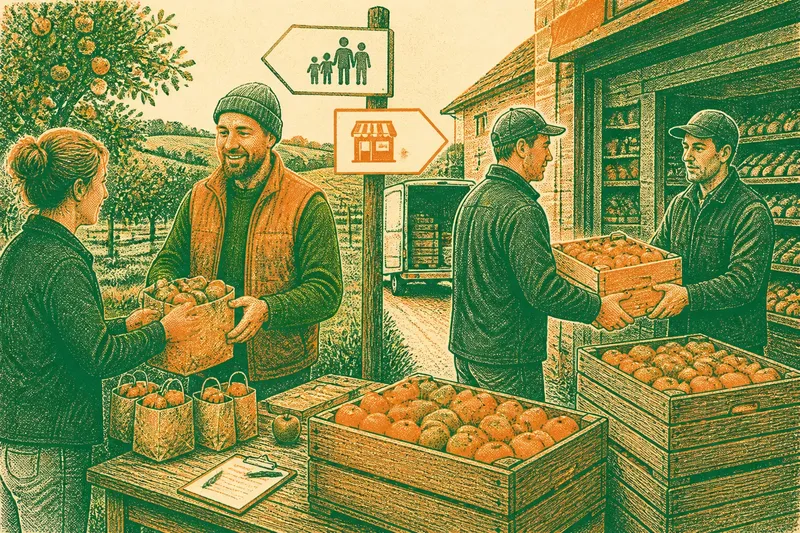
Say you have a small batch of cooking apples and two possible buyers: households collecting from the farm and a village shop. You sort the household orders into mixed bags and set a collection window; the result is several brief handovers, with customers able to ask about storage or use. For the shop, you agree to grade the apples into crates and deliver them; there are fewer handovers with end customers, but the buyer’s grading and delivery requirements shape the preparation. The choice depends on which arrangement you can fulfil consistently for this batch, not on a general rule about orchards.
Keep communication clear
Direct sellers answer questions about availability, ingredients, collection times and substitutions. A paper order sheet, dedicated farm email address or online shop can keep requests together. Decide how customers will hear about a change or an item that has sold out.
With wholesale, the main contact may be a buyer, account manager or coordinator rather than the person who eats the food. Agree how orders are confirmed, how changes are reported and whom to contact about a delayed or rejected delivery. If a buyer provides a forecast, ask whether it is an estimate or a firm order; the distinction affects what you can safely plan to supply.
Use a channel that suits the relationship: a weekly message may work for a small collection scheme, while wholesale orders may need written confirmations and delivery notes.
Check the handover
Before agreeing to a route, use this list to settle the practical details. Each answer should point to a decision or a follow-up action.
- Customer questions: Check who will answer questions about the food. If you can provide that contact, set a direct-sales channel; if not, agree who will handle enquiries before accepting direct orders.
- Order changes: Check who receives and records changes. If one person can keep the order record current, use that person as the contact; otherwise, agree a shared written method before confirming orders.
- Preparation: Check the required grading, packing and labelling. If you can meet the specification, confirm it in writing; if you cannot, ask for an acceptable alternative or decline that order.
- Transport: Check who collects or delivers and where responsibility passes. If the handover point is clear, record it on the order; if it is not, settle the location and responsibility before dispatch.
- Unsold or rejected goods: Check who decides what happens to food that does not sell or is not accepted. If the buyer’s process is clear, record it; if it is unclear, agree a return or other handling arrangement before supplying.
- Records: Check which invoices, delivery notes and traceability details are required. If you can keep them in your existing record system, assign who will update it; if not, set up a suitable record method before the first order.
Different routes also provide different kinds of feedback. A direct customer may comment at the point of sale; a shop may pass on a request or complaint later. Decide what information would help you alter the product or how it is offered, then record it in a consistent place.
Questions about routes?
Does direct selling always mean more work?
It can involve more separate transactions and customer contact, but a regular collection arrangement may make the routine predictable. The tasks depend on the order format, the amount sold and the preparation each product needs.
Does a wholesale buyer collect?
Some buyers collect from the producer; others expect delivery to a depot or premises. Confirm the collection point, transport responsibility and condition at handover before agreeing to supply.
Can one product use both routes?
It can, provided each buyer’s quantity, timing and specification are clear. Keep separate order records so the packing and delivery arrangements for one buyer are not mistaken for the other’s.
What should the first order confirm?
Confirm the product and quantity, price and payment terms, packing, collection or delivery details, and how to report a problem. A written order confirmation gives both sides a shared record of what was agreed.
Choose for the product
Instead of deciding which route is best for the whole farm, choose for the product and the particular order. A bag of salad leaves, a jar of chutney and a crate of apples may each have different packing, timing and buyer requirements. Compare the actual tasks and handovers, then agree an order that matches what you can supply.
For a first transaction, record what each side will do: the product, quantity, preparation, collection or delivery, communication and payment. After the handover, note where questions arose, which requirements took extra coordination and what should change in the next order. That record helps you judge whether to repeat the arrangement, adjust it or offer the product through another route.