The Seasonal Calendar Is Not a To-Do List
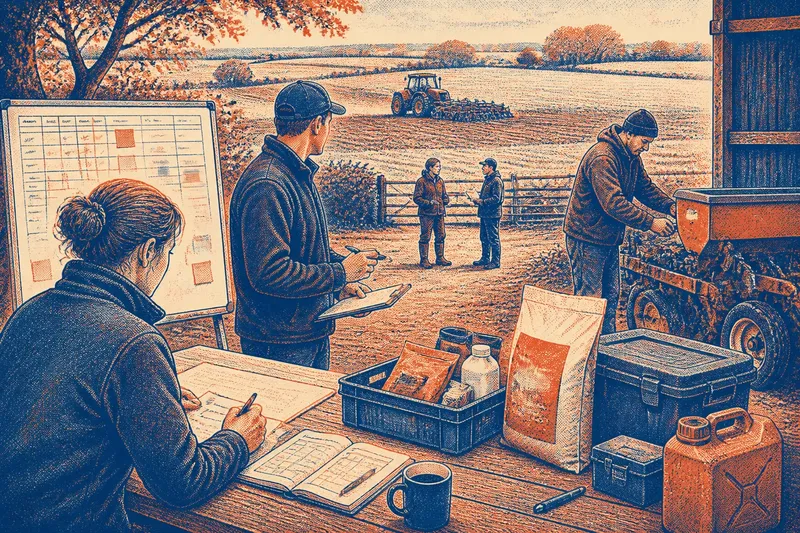
A seasonal calendar helps farm workers prepare for changing conditions, with prompts that turn likely work periods into timely checks and clear decisions.
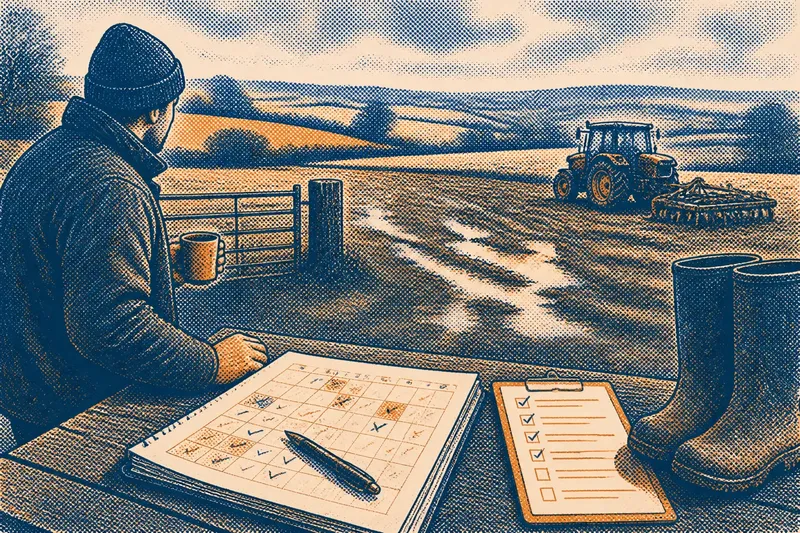
When should you sow, cut hay or move livestock? A seasonal calendar helps you see when work may come due, but it cannot choose the right day for your field. Treat it as a prompt for preparation and observation, not as a to-do list that must be followed in order.
That distinction matters because a calendar records patterns, not commands. A week marked for planting might arrive with waterlogged soil; a dry spell might bring an opportunity earlier than expected. The useful question is not simply what appears on the page, but what you need to learn before deciding whether the job is ready.
Read dates as prompts
A calendar can remind you to check seed stocks, arrange machinery or speak with a contractor before a busy period. It is less useful as a fixed sequence: crops, soils and weather do not follow a tidy page.
Write entries around their purpose. “Check whether the ground is workable” is more useful than “cultivate today”. A date can prompt an inspection; it should not replace one. A note about a likely lambing period, for instance, can help organise observation and cover without implying every animal will follow the same timetable.
Use dates to remember what to look at, then make the decision from what you observe.
Match prompts to conditions
The best calendar entry depends on what makes the timing uncertain. For fieldwork affected by rain, frost or drying conditions, use a broad window and name the condition to check. If soil smears on a boot or clings heavily to a tool, pause cultivation and reassess rather than treating the calendar date as permission to proceed.
Fields on the same farm can differ in shelter, drainage, slope and exposure. A low-lying patch may stay wet while a lighter, sheltered field becomes workable. Use familiar field names or map references to record observations, and keep separate notes where places regularly differ.
Some jobs depend on a visible condition more than a date. A crop may need to reach a suitable stage; stored produce may need checking; a boundary repair may be easier when access is clear. Schedule an inspection of that condition instead of assuming the task is ready on a particular day.
Say you manage a damp field and your calendar prompts a spring seedbed check. You inspect after rain and find sticky soil, so you postpone cultivation and note to check again after conditions change. The calendar has still done its job: it prompted an observation, while the field determined the decision.
Record what can move
A calendar need not sort work by urgency or prescribe a sequence. Instead, mark whether an entry is a preparation prompt, a condition check or a task that depends on a particular opportunity. That distinction helps people sharing the calendar understand what it asks them to do without turning every reminder into an order.
For instance, “check seed stocks” can be done ahead of a likely sowing period, while “inspect seedbed” waits for a suitable opportunity. “Sow if the field is workable” records both the task and its condition. These entries describe different kinds of decisions without ranking all farm work against one another.
For each entry, check what it means and choose the matching action:
- If the entry is “check seed stocks” and supplies are ready, mark the preparation complete; if they are short, arrange the needed supplies before the likely work period.
- If the entry is “inspect seedbed” and the soil is workable, record that it is ready for a separate decision; if it is sticky or smeared, postpone cultivation and plan another inspection.
- If the entry is “check access” and the route is clear, keep the planned visit; if it is blocked or too wet, note the obstacle and inspect again when access may have changed.
- If the entry is “check crop stage” and the crop has reached the condition relevant to the task, consider the next action; if it has not, record what to look for at the next check.
- If the entry is “inspect stored produce” and it appears sound, continue the routine checks; if you see a problem, follow appropriate handling guidance or seek qualified advice where needed.
- If the entry is “review lambing cover” and the planned cover is in place, leave the arrangement recorded; if there is a gap, contact the people who can help before the period approaches.
Imagine your calendar contains “check the north field for sowing” and the entry is a prompt, not a booking. You inspect after rain, find the ground sticky, and write “recheck when soil no longer smears”; at the next visit, you find it workable and decide the field is ready for the next sowing decision. The observable result is a record of what changed and why the decision changed, rather than a missed date copied forward.
Keep useful records
After a job, record what conditions made it suitable, what delayed it and whether the note applies to a particular field or enterprise. Brief observations are enough if they help you make a more informed check next time.
Review entries as the season develops. Remove assumptions that no longer fit, and describe uncertain periods as windows rather than appointments. If the calendar is shared, distinguish “prepare”, “inspect” and “do the work if conditions allow”. That small distinction makes a reminder easier to interpret.
For decisions governed by product labels, manufacturer instructions or local rules, follow those directions. A general seasonal calendar cannot replace them.
Which calendar entry fits?
Should a calendar use exact dates?
Use exact dates for fixed commitments, such as a booked delivery or meeting, and broader windows for weather-sensitive work. Pair a window with a condition to check so the date prompts a decision rather than dictates one.
What if the season starts unusually early?
Check the relevant field, crop or livestock condition before bringing work forward. Mild weather may create an opportunity, but it does not by itself show that every task is ready.
How should a small farm record several fields?
Keep a shared seasonal view for general prompts, then add field-specific notes where drainage, exposure or access changes what you need to inspect. This preserves local detail without making the main calendar difficult to read.
What belongs in the calendar after a delay?
Record the reason and the next useful check rather than copying the missed date forward. “Recheck access after the ground firms” gives a clearer prompt than an unexplained replacement appointment.
A seasonal calendar is most useful when it helps you prepare early and remember what to inspect. Keep the seasonal calendar as a record of likely work and changing observations, so the page can guide attention without deciding for the field.